[00:01] Justin Baeder:
Welcome to Principal Center Radio, bringing you the best in professional practice.
[00:06] Announcer:
Here's your host, director of the Principal Center and champion of high performance instructional leadership, Justin Baeder. Welcome everyone to Principal Center Radio.
[00:15] Daniel P. Kelley:
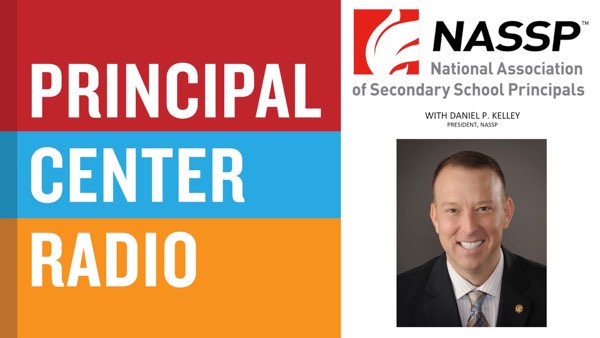
I'm your host, Justin Baeder, and I'm honored to be joined today by Daniel P. Kelly. Dan is president of NASSP, the National Association of Secondary School Principals, and he's also principal of Smithfield High School in Rhode Island. As a leader in education, Dan believes in challenging current instructional practices to provide creative and effective opportunities for students to learn, grow, and succeed. He's passionate about educational leadership that builds strong relationships with faculty and the community, utilizing social media to foster connections between educators, and and establishing personal learning networks for collaboration and professional development.
[00:53] Announcer:
And now, our feature presentation.
[00:55] Daniel P. Kelley:
Dan, welcome to Principal Center Radio.
[00:57] Daniel P. Kelley:
Thank you, Justin. It's a pleasure to be with you, and this is my second podcast ever, so I'm really excited to be part of this. This is great.
[01:03] Daniel P. Kelley:
Well, it's great to have you on. I think you were the first NASSP president to be on Principal Center Radio as an acting president. And I wonder if you could just tell us a little bit about that role, because people might assume that it's kind of a permanent job that you get hired into and then you have an office in Virginia or Washington, D.C. or something. But I understand this is by design a temporary gig.
[01:21]
I wonder if you could tell us about that role at NASSP.
[01:23] Daniel P. Kelley:
Sure. So I've been an active high school principal now for 12 years. I've been the principal of Smithfield High School in Smithfield, Rhode Island. So I've been on the board of directors for NASSP. This is my fifth year that I've been on the board. And so when I originally was selected to represent Rhode Island in Region 1, you sign up for a four-year board term.
[01:43]
And in around probably about the middle of the second year, I started to think maybe about running for president of the organization. In my third year, I ran. And so I was fortunate enough to win that election. And then I served as president-elect for a year, learned a little bit more about that leadership role and what it was going to take. And then I took over last July 1 as president of NASSP. And basically, I get a leave of absence for a year from my district.
[02:13]
And so on paper, I'm still the principal of Smithfield High School, but they moved up one of my assistant principals to take over for the year. And I get to go out on the road. I have the best job in the world. I get to see the country. I get to visit with principals. I get to go visit schools.
[02:28]
I get to go to Washington and spend some time up on the hill advocating for principals and a lot of the programs that NASSP is in charge of. We've been really fighting hard around Title II and making sure that those title monies are going to be safe. I talk a lot about CTE when I'm up there just because we have a strong CTE program within our district. So it's been great. And I've been able to, like I said, go around the country. I'll speak at conferences.
[02:54]
I'll do professional development for principals. A lot of times I just get to sit and listen to principal stories and tell their perspective on things. And then I bring that back to the board. or I may bring that to Capitol Hill when I'm advocating for school leaders across the country.
[03:10] Daniel P. Kelley:
I think it's so important to have that connection because, you know, we all understand with the national associations, we can go to the conferences, we can be members, we can get publications, but there's no substitute for that face-to-face communication. So you've actually been getting into high schools around the country?
[03:25] Daniel P. Kelley:
I have. About two weeks ago, I was in the Sioux Falls, South Dakota area, and I was able to spend some time in the Harrisburg district, with a board member, Brad Seamer, and spent some time in his high school. And then I was also able to visit a couple of the middle schools there, visited Darren Elwine, who is one of our digital principals of the year, and got to see some of the great work they're doing around giving kids choice in their learning. The high school has about a 60-40 model of 40% are doing that traditional, the way we've always done school kind of schedule, and then about 60% of their kids are doing their own personalized learning plans. And some of them are getting through high school faster and going right into college and getting college credits. Really some fascinating work that they were doing at the high school level using three different management systems to place kids depending on their choices or their needs or deficiencies that needed to be worked on.
[04:21]
It was fascinating. Then I got to spend some time at Darren's school, Darren Elwine, and to see some of the maker space that they have in their library and their use of some of the robotics and the drones and things like that. It was really, really fascinating. So you get to see some of those really innovative districts. And then I've been into some other districts where their buildings are just falling down and they're struggling to get town and state resources to just, you know, to fund their most basic necessities. So it's really been an interesting ride of seeing a lot of different spectrums of buildings and schools and principals and just different leaders around our country.
[04:57] Daniel P. Kelley:
I think a lot of people in the United States may not know that we're kind of unusual among developed and advanced nations in that our school funding is largely local. Has that been your impression as you travel around?
[05:09] Daniel P. Kelley:
It has been. I was in Oregon visiting a school, and they've been working for years to get the local community to pass a bond. And they finally get it passed, but they wouldn't go forward with the project. And I remember this blew me away. I get out of the Uber and I'm walking up to the building with two principals from Hawaii. And I called the principal.
[05:30]
I said, hey, we're here. Which door do you want us to go into? And she said, it doesn't matter. They're all open. And I was, you know, I went right to school safety and security. And I was like, what do you mean they're wide open?
[05:41]
And they're an open campus. And so they are so stretched for space in this building that they've taken their cafeteria and made it into mini classrooms. And the kids can go wherever in the community to go eat when it's their turn for lunch. But it's been, I think it's been six years they've been waiting to get this new school built there. And it continues to get delayed. But the teachers were awesome in that it didn't faze them.
[06:07]
They just rolled with the punches and they adapted and they made the best of what they had. And so we saw some tremendous teaching and learning going on on that visit. I think they had six different languages that were being taught in that building. It was really fascinating.
[06:20] Daniel P. Kelley:
You do get to see the full range of just creativity and resourcefulness that educators bring. And certainly I know that the advocacy role that you play is also very important in advocating for the funding to kind of get people out of those situations. But yeah, my hat goes off to educators who are making it work for kids, not sitting back and complaining, you know, oh, we can't because we don't have what we need. Doing both, you know, saying, hey, please give us what we need, but we're going to make it work in the meantime because that's what kids need us to do.
[06:46] Daniel P. Kelley:
That is one of the big takeaways that I've been really proud to see. is that resourcefulness, that drive, that passion. I live and work in Rhode Island. And so I'm in this tiny little New England community with only 750 kids. And I'm really proud of what we've been able to accomplish. But now that I've seen it on a much grander scale, I'm really proud of what we're accomplishing.
[07:06]
And yes, we have things that we need to continue to work on. And there are things in education that we can always get better at. But I really believe that we're educating kids at a higher level than we ever have before in this country. And we have a lot to be proud of. And we have a lot of really positive stories that teachers and administrators need to continue to share with the public.
[07:24] Daniel P. Kelley:
Absolutely. And I think one of the most exciting innovations to me is the first thing you mentioned, the idea of building in more choice, more opportunity for students to kind of set their own path and set their own pace as they go through school. Because I think probably you and I grew up in the era of tracking. And I assume we were probably beneficiaries of that. And there were many, many students who were not beneficiaries of that. And we have kind of gotten away from that.
[07:48]
And then for many, many years, everybody kind of gets the same thing. But now we're starting to see maybe a different vision. Talk to me about what you're seeing around choice and around opportunities for truly personalized learning, not go sit at a computer and work at your own pace on the computer, but, you know, truly personalized learning. What are you seeing as you visit schools?
[08:07] Daniel P. Kelley:
Well, unfortunately, I'm not seeing as much of that as I would like. I think that conversation is a very difficult one to have in communities because I know in my own community, there are still a lot of very traditional values and beliefs around teaching and learning. And parents, you know, they want what their kid had and they want to sit through that, you know, that six hour day or six and a half hour day. I think the visit that I just had recently that I was mentioning in Harrisburg, South Dakota. was probably one of the most innovative and exciting places that I've seen. And when I called my wife after visiting all day, I must have talked to her for 20 minutes about, hey, we need to move to this place.
[08:44]
We got to move to South Dakota. This is fantastic. And she laughed at me and go, we're not going anywhere. But when I was at Darren Elwine School and I got to observe a sixth grade team of teachers and all the students had iPads. They were a Mac building. So the each teacher set up what the morning was going to look like and what their topics and what their key standards were that needed to be addressed for that day.
[09:10]
One of the teachers happened to be out sick, and so they had a substitute there. And so they had this morning time where they all got together in a slightly oversized classroom, and they did some welcoming activities, kind of break the ice, kind of get everybody back together, get them focused for the day kind of thing. It was like the day before a four-day vacation or something like a long weekend. So the sixth graders being sixth graders, they were a little amped up. And so they did a couple of things to get them together, get them focused. And then each teacher stood in front of the group and talked about what the goals were for the day and what they were going to be teaching.
[09:42]
And this is the four core areas. And so each teacher went through what the big goals were. And then the kids got to spend five minutes and through their iPads and through the way the teachers had set this up, the kids picked where they were going to go for the next four blocks of instruction. And so Darren sent a young man over to me and he said, Hi, Mr. Kelly, I'm going to show you how I'm going to pick my schedule today. And so the young man started going, I was absent yesterday, so I missed this standard and this key topic.
[10:10]
So I have to go during the fourth block because that's when she's doing extra help and can reteach me what I missed yesterday. So I can't do anything during that fourth block. During the first block, I really don't need to do too much there because I'm actually ahead of where I need to be. But I need to work on a group project and my partner is only available during the second block. And so this went on for about maybe a minute of him explaining to me and reasoning why he had to go to everything. And he plugged it in and boom, he was off.
[10:40]
And he took off and went to go work on. And so I was just blown away by that ability and the use of technology for these teachers to get their standards and what they need out to kids. Kids have that choice. And then we went around to different pods to see where kids were. And there were kids all over the building. There were three girls that went back into that room we were just in, and they were working on a rap song as a final assessment to show that they met something.
[11:08]
It was something social studies related. We went into the library, which is where the makerspace was, and the science kids were testing out their buildings. So they had a specific set of resources, and they had to create a structure with certain parameters. And the teacher had this crazy contraption to simulate an earthquake. And the kids were all around watching the teacher to try to break down these buildings. And they were talking about what worked and how the structures.
[11:35]
It was fascinating. There were kids by themselves in the hallway, silently working on some reading materials. A couple of them were doing some math. And they were all in this little area. They were all being supervised. Teachers were kind of going around monitoring.
[11:49]
There was one room that had three special education staff members that were working individually with kids and trying to help them through. But it was true choice. And kids were setting their own pace and could get extra help. And it was really, really powerful. And what is interesting is to see these sixth graders, what happens to them when they get to the high school? And so they're in this interesting transition between kids having choice.
[12:18]
But at the high school, there's not as much choice. And as I mentioned, about 60% are doing personalized learning track. 40% are staying on that traditional track. So they're really looking forward to when this group of sixth graders becomes freshmen, how does that dynamic really change at the high school level? But when you go to visit the other middle school, they're just getting started in the conversation. So it's really interesting to see pockets of things happening in this little microcosm of one district.
[12:47] Daniel P. Kelley:
Yeah. And where was that school located again?
[12:49] Daniel P. Kelley:
So this was Harrisburg, Harrisburg School District, just outside of Sioux Falls in South Dakota.
[12:55] Daniel P. Kelley:
Very cool. So we're not talking Silicon Valley. We're not talking New York City. We're talking a pretty typical school as far as access to resources and really innovation in simply the way that we approach things as adults, right? We're not talking about any kind of magic formula of technology and social capital and urban resources and things like that.
[13:15] Daniel P. Kelley:
No, we're talking about just having key staff and key leadership saying, hey, we value this. This is important. We need to continue to play with this and experiment with this. And I got to give a shout out to those leaders there, especially Darren Elwine. Like I said, he was one of our digital principals of the year. And so he's doing a whole bunch around social media and using drones.
[13:34]
But he's allowing his staff to experiment. and they're not afraid to fail. And if it doesn't work, they go back, they rework it, they try to fix it and make it better for the next time. And it was really a powerful model that I think school districts can really take a look at is what the future of learning really could look like.
[13:49] Daniel P. Kelley:
I'm grateful that you have the opportunity this year to go and seek those schools out because I got to be honest, I think the norm in our profession is very, very far from that. I think we have a lot of work to do in this area of making school engaging for kids. I've seen the charts and the graphs the older kids get, the less engaged they get in school. We've got to take some responsibility for that as educators. But the reality is we often have not really known what to do. You know, parents are pressuring us to teach the way that we taught them.
[14:18]
We tend to do that naturally. We tend to follow the apprenticeship of observation and just kind of repeat what was done for us because, hey, it worked for us. But, you know, we've got survivorship bias. They were not remembering all the kids that it didn't work for. And that's not OK. You know, we have got to find a way to reach all the kids that we're not currently reaching.
[14:35]
it's it's so exciting to hear that without really any exceptional resources without you know a four million dollar grant this is being done and it is possible to dramatically rethink the student experience so I know we have a mutual friend in Jethro Jones who has made many of these same changes in his schools that he's worked in you know there are these pockets of excellence and experimentation and these you know kind of bright spots in our profession where People are going to learn. People are seeking out these schools just as you are and looking for ways not to necessarily copy their model, but to learn from it and to say, hey, we've got innovative people in our school too, innovative students, innovative staff, and we can make an effort in the same way that those most innovative schools have.
[15:19] Daniel P. Kelley:
I think that school leaders, there's a couple of challenges that really impact us. And when I went through my master's degree program and even some doctoral level work, we don't talk about innovation in those programs very often and i think there's a breakdown there and i've struggled with trying to find the right people to talk to to say hey we have to change the way principles are being developed and trained and to start thinking like this and so what happens is you start to find these like-minded people through social media through listening to podcasts on principal center radio and you start to find these little groups and niches of people you really start to lean on them and in my travels i'm still blown away by folks that are not utilizing social media tools to help connect with with other folks in new england we have a group called the new england secondary school consortium and they have a subgroup called the league of innovative schools that my high school is part of they've become a great resource for us especially around things like standards-based grading and really trying to be innovative and change our mindsets and our thinking
[16:23]
with how education should be run. So we've got to figure out a way to continue to get this out to the masses that social media can really be the linchpin to connecting people so that we can share these great stories.
[16:35] Daniel P. Kelley:
Absolutely. And I know for anyone who's been to the National Principals Conference or the various state conferences, we see those ideas in person just not often enough. And it may be a decade between times when someone's able to get to, say, a national conference and really get that face-to-face exposure to new ideas. But yeah, social media has been just a tremendous leveler of the playing field and way for people to connect. And, you know, and again, Jethro's on Kodiak Island in Alaska. So not a lot of people are going to go visit Jethro's school.
[17:07]
But, you know, tens of thousands have heard of what they're doing in his school. And, you know, as you travel around and advocate and learn on behalf of NASSP, it's great to see those ideas circulating back through the publications, through books. And I know many of the people you've spoken with have probably written books or are working on books. to share the word. And we've interviewed many on Principal Center Radio as far as innovative school models and innovative approaches to engaging students and engaging communities. Well, Dan, it has been a blast to speak with you on Principal Center Radio.
[17:39]
If people would like to connect with you in person, where is the best event, the best national conference for people to look forward to and make plans to attend?
[17:48] Daniel P. Kelley:
Yeah, so I would really encourage your listeners to attend the National Principals Conference. This year is going to be July 11th. through the 13th and we're going to be in the Chicago area. This is a K to 12 conference, which is something that we started last year and that we really want to try to focus on leadership and not look at levels necessarily. We've got some great leadership strands that we're developing for the conference, leading learning, building culture and designing the future. You know, last year's conference in Philadelphia was a huge success and we're looking to build on that this year in Chicago.
[18:23]
So again, July 11th through the 13th, we would love to see folks out there for that.
[18:27] Daniel P. Kelley:
Well, Dan, thanks so much for joining me on Principal Center Radio.
[18:30] Daniel P. Kelley:
My pleasure. Thank you very much, Justin.
[18:32] Justin Baeder:
And now, Justin Baeder on high-performance instructional leadership.
[18:37] Daniel P. Kelley:
So high-performance instructional leaders, what did you take away from my conversation with Dan Kelly, president of NASSP? You know, one of the big things that I'm seeing is just the huge variation from school to school. And that variation can be a good thing if it gives us ideas for innovating and expanding opportunity for our kids that maybe has never existed before. You know, the first school to create a maker space was doing something different, and I think that that freedom to experiment is a good thing. But I think we've also got to start taking seriously the gaps that are in place in opportunity for our kids. And of course, some of those are opportunity-based, based on resources and location, but we can do an incredible amount, as you heard in my conversation with Dan, just by innovating as educators, just by being resourceful and learning through social media, learning through books, learning through conferences, what's being done elsewhere with very similar resources to what we have,
[19:35]
to change the student experience. And I think especially at the secondary level, we have got to make a more concerted effort to make school engaging for kids, to not make it simply a more efficient version of what we had when we were kids, but to really recognize that the world is changing, students are changing, and we need to be engaging students in their education if we want that education to give them the opportunities that they need in life. So I want to encourage you to check out Jethro Jones' podcast, Transformative Principal, and you can find Dan Kelly on there as well. I want to encourage you to check out the Project-Based Learning Network, which is another project of ours here at the Principal Center and Achievement Science. The Project-Based Learning Network is designed to connect educators who are working on things like makerspaces, project-based learning, rethinking the school experience.
[20:29]
And let's be honest, this is challenging work. for us as educators. It's challenging work for teachers and for administrators to pull that off. But the Project-Based Learning Network is here to support you. So you can find out more about that at amybader.com slash pbln.
[20:45]
I also want to encourage you to attend a conference sometime this year. It may be your state conference, but if you can, get to a national conference. You The National Principals Conference will be in Chicago in 2018, so make sure that you see if you can attend that. Do everything you can to get to a conference, connect with people, get new ideas, and bring them back to your school.
[21:09] Announcer:
Thanks for listening to Principal Center Radio. For more great episodes, subscribe on our website at principalcenter.com slash radio.